
What will students study on the Winchester Pre-University Artificial Intelligence (AI) courses?
Introduction
If you’re a 15-17 year old international student looking for a challenging UK summer school, look no further.
On the Discovery Summer Pre-University programme at Winchester College we offer a range of Major and Minor courses designed to prepare international students for future university and careers choices. The subjects include Artificial Intelligence (AI), Economics, Engineering, Film Making, IELTS, International Relations and more.
I met up with the Artificial Intelligence teacher to find out why he’s passionate about AI and what students will be studying in his courses this summer.
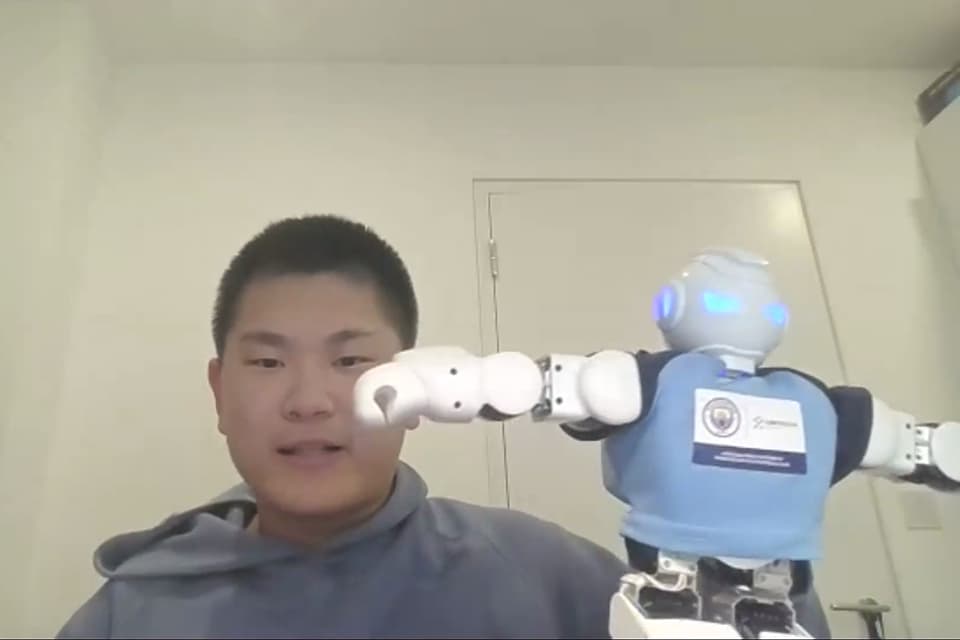
Meeting the teacher (and his robot assistant)
It’s Tuesday morning and I’ve arranged to meet Ian (our real-life human AI teacher) on Zoom – but he’s not alone – he’s joined by his humanoid robot. The robot dog is also at home but at 25kg he’s too heavy to jump on the desk.
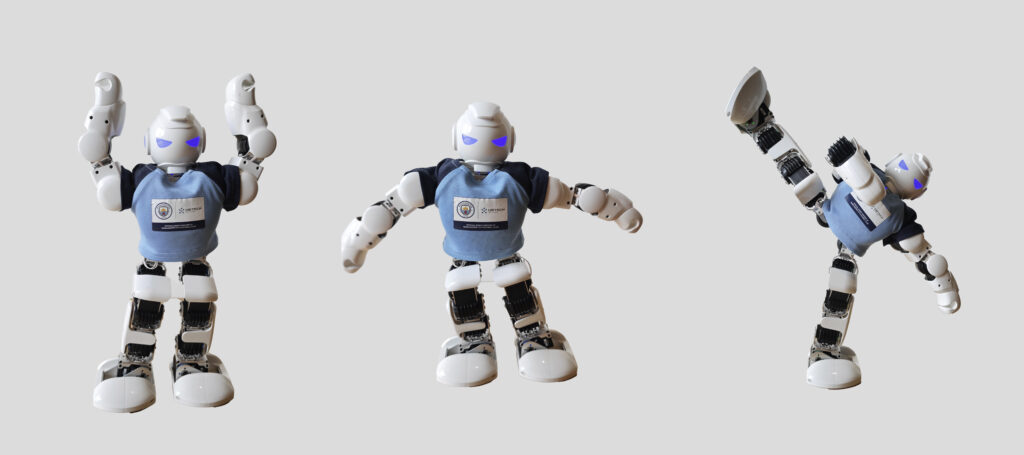
I’m very pleased to meet the robot and he gives me a little wave – I’m told he can also balance on one leg, slide and dance!
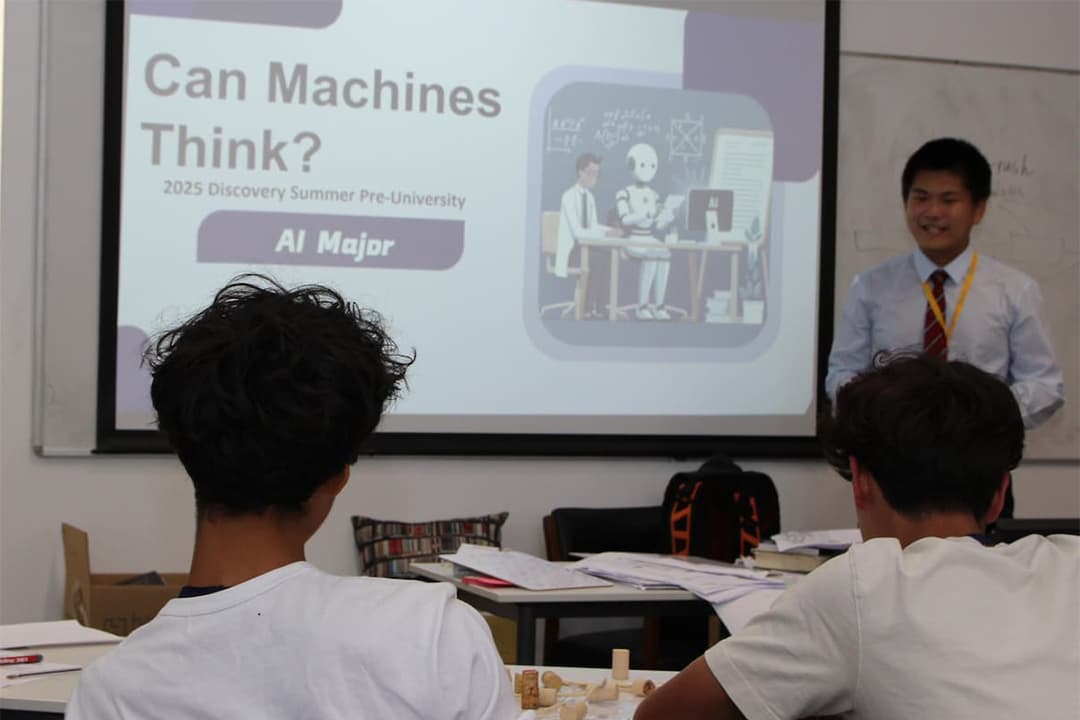
But before we talk about robots, I have some serious questions for Ian who taught AI on our Pre-University course in 2025 and will be returning to Winchester this summer.
Ian is currently studying Robotics and Artificial Intelligence at University College London. He has also won numerous computing competitions and was awarded first prize in the VEX Robotics World Championships in 2022.
The Future of AI: Insights from our Winchester AI teacher
In 2022 when ChatGPT was launched I saw it had huge potential. At the time I asked it to help with my physics studies. It helps us to find information, sort things, be creative, and all for a very low price. Before the launch of open AI, computers mainly followed predefined instructions but now AI can be generative. I think it’s fascinating.
Hands-on Learning: Highlights from the 2025 AI Summer Course
Last summer we started with basic AI concepts – understanding Large Language Models (LLMs), machine learning, algorithms and computer vision. Then we moved on to building basic chat bots. We built a basic AI to recognise road signs – to help train self-driving cars. In the AI Minor we used it to write stories and draw cartoons. We also made a plant classifier to identify flowers and trees around the Winchester campus. Students learned that with the right tools and prompts AI can be incredibly useful.
What’s changed in the world of AI in the last year?
So much has changed since last year with the launch of agents like Manus and OpenClaw. Now they have multiple capabilities and can make slides and videos. Combining robotics with AI is also cool. Humanoid robots can now do jumps, flips, help with household chores. Imagine what they’ll do in a few years’ time.
What new projects do you have planned for our 2026 AI Major?
I’ve designed a new robotics module for this summer. Let me show you what the RoboMaster can do. (Ian shares his screen to show me live footage of his robot racing around the room.) The robot has four wheels and a camera so it can follow a path, recognise signs and people, learn how to drive itself, and uses an infrared targeting system for interactive gameplay. Students will learn how to build their own programmes using Scratch coding which can also be translated into Python. It’s a very hands-on course so they’ll see how AI becomes physical, interactive and responsive.
The RoboMaster will be coming to Winchester as well as the humanoid robot and the robot dog. Here is a video of the Humanoid robot’s basic motion:
What do students learn on the AI Minor?
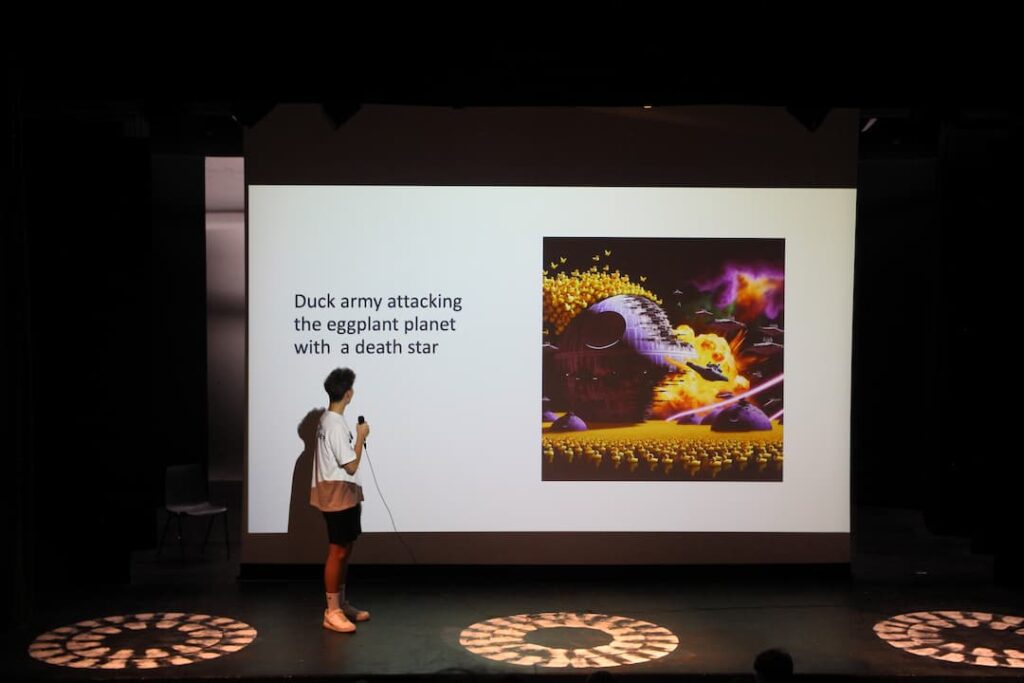
On this course we focus more on AICG (AI Content Generation). We’ll use it to draw, create images or even videos all without the need for cameras or production equipment. There is also valuable discussion about the potential harms and the ethical implications of AICG.
Is this course suitable for beginners without any prior knowledge of AI and coding?
Many of the students arrived last year without knowing anything about AI. In the first lesson we cover the basics but soon move on to interactive tasks that challenge everyone. Even beginners were very capable and passionate about technology by the end of the week.
How are the classes structured?
We start with a short presentation to introduce new concepts. Then we move on to a variety of group challenges such as research and hands-on tasks. I’ll set up multiple activities so that students can try as many as possible and mix with more people. Importantly, they learn from their mistakes so that they can move on to more complex tasks. At the end of the week, they present their projects to the whole course to boost their confidence and presentation skills.
Will students learn about the ethics of AI use?
Yes, this is a very important part of the course. We covered it last year but since then there has been so much concerning news about AI. We’ll cover ethical questions around privacy, mental health, bias, misinformation and the use of AI for illegal purposes.
For example last year I posed the question:
“If a self-driving car had to choose between swerving to avoid a pedestrian and risking the passengers, what should it decide?”
Do you worry that AI will kill creativity?
I think it’s a double-edged sword. On the one hand AI is much more efficient than a human – humans can’t write 1,000 words in a few minutes but AI definitely can. I also think AI can sometimes outperform humans in specific tasks and it has a much bigger knowledge base which can be very useful. But even if we use AI to write a story, we need to have the initial idea and learn how to write and engineer the prompts appropriately. AI is a useful tool but it’s not magic.
What will students gain from the AI Major and Minor?
Firstly, they’ll gain a lot of technical knowledge. Secondly, they’ll take part in fun, hands-on activities to practise their skills and turn knowledge into reality. Students are always working in multi-national teams so they share ideas, negotiate, work collaboratively and practise their English.
Last year there were some very intelligent, creative students who took a step forward – sharing their ideas about a project before I’d even taught them how to do it. They were really motivated to study by themselves and use what they’d learned to solve problems. I’m looking forward to using AI for creativity in this summer’s classes.
What are the other benefits of the Pre-University course at Winchester?
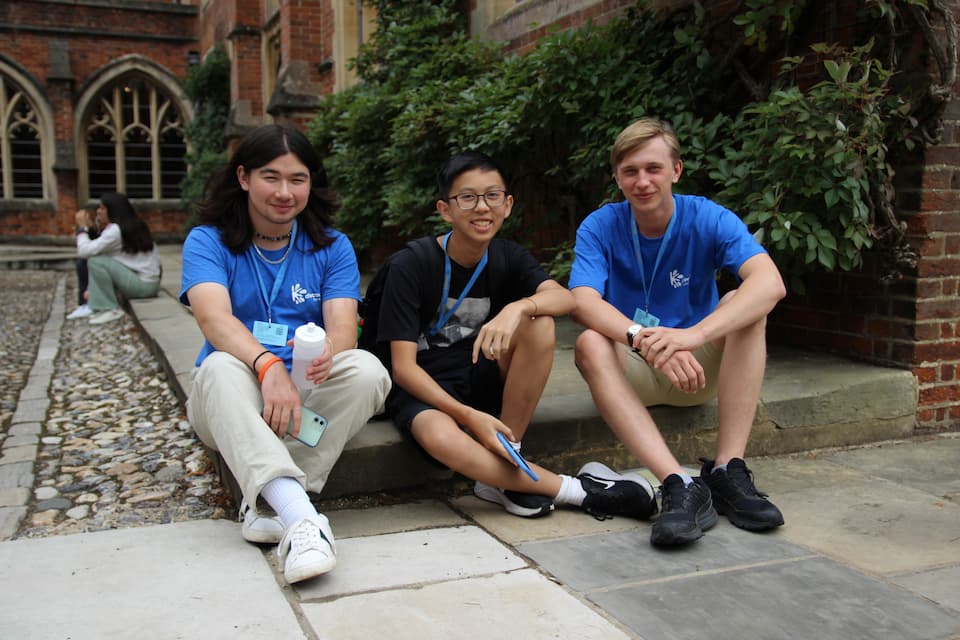
Being part of the Discovery Summer community that brings international students and British teenagers (our English Student Hosts) together on campus for 2 or 3 weeks is a real benefit. Living, studying and practising their English together creates an amazing group learning experience which is so valuable for their future development.
After talking to Ian, I’m quite jealous. The AI classes sound fascinating and our students will gain so many technical, analytical and problem-solving skills. AI is a fast- moving topic so there’s always more to learn. Whatever your views about AI, it’s essential for young people to gain the skills and knowledge to understand how to harness its capabilities whilst considering ethical questions.
We look forward to welcoming new and returning students to our Pre-University course at Winchester this summer. And I can’t wait to meet the robots in person!
Find out more about the Discovery Summer Winchester Pre-University course with AI Major and GenAI Minor.
FAQ
Should students bring their own laptops?
We provide some laptops for group work but students are welcome to bring their own.
No, all projects are conducted online so students are not asked to download any programmes.
We suggest that students have Upper-Intermediate (B2) to Proficiency (C2) English level.
The Major is more in-depth as it’s 12 hours per week whereas the Minor class is 6 hours per week.
The academic programme includes 22.5 hours’ tuition per week divided between Major and Minor subjects + elective masterclasses. Fees include accommodation at Winchester College, 3 meals a day, 24/7 care, a high staff to student ratio, varied afternoon and evening activities, 2 excursions per week, airport transfers, the chance to meet and mix with British teenagers (our English Student Hosts), medical & travel insurance.